REVIEW · ARUSHA
7 days Kilimanjaro climb via Machame route (Whiskey route)
Book on Viator →Operated by Serengeti African Tours · Bookable on Viator
Kilimanjaro rewards effort, not comfort. This 7-day Machame (Whiskey) route is scenic, but it’s also steep and demanding, especially with the tighter schedule. You’ll spend your days moving through rain forest, moorland, semi-desert, and alpine desert, then push for a summit sunrise from Stella Point.
What I like most is the team approach around you: guides and porters are part of a coordinated operation, and the camp setup is meant to keep you functioning when temperatures drop hard. Another big plus is the way the climb is paced for acclimatization—your hardest days still include time that helps your body adjust before the summit night.
One thing to consider: this route is tough. If you don’t already have solid hiking stamina (and some altitude familiarity), you’ll feel it—especially on the days around Lava Tower and the night push to Uhuru Peak.
In This Review
- Quick take before you go
- Machame (Whiskey) Route: what this 7-day climb really asks of you
- Arusha to Machame Village: the muddy start at the gate
- Day 2 to Shira Plateau (3,840 m): moorland hiking with big-glacier views
- The Lava Tower day (up to 4,630 m): when acclimatization meets misery
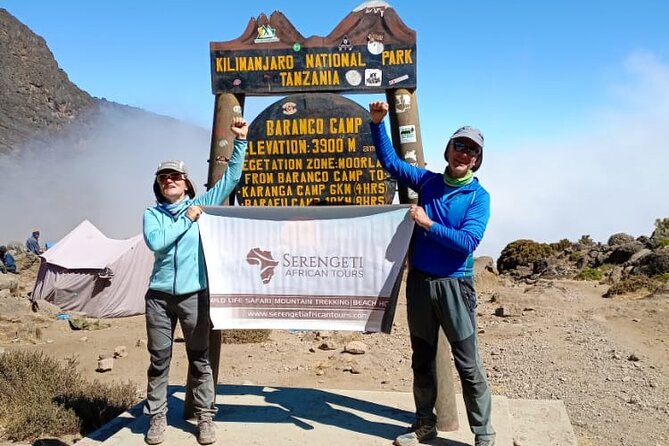
- Great Barranco Wall and Karanga Valley: the day that builds confidence
- Barafu Camp (4,550 m): wind, rocks, and your last easy water reality
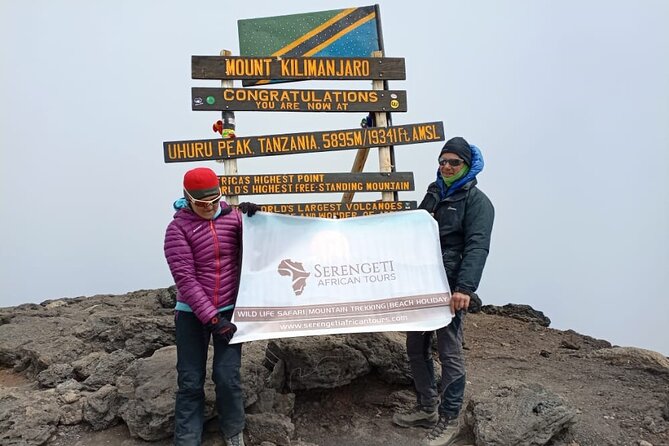
- Summit night from Stella Point (5,685 m) to Uhuru Peak (5,895 m): the sunrise moment
- Mweka Gate and certificates: the emotional finish with structure
- Food, tents, and camp setup: comfort that matters at altitude
- Guide and porter team: the human engine behind summit success
- Price and value at $2,300: what you’re paying for and what you’re not
- Should you book the 7-day Machame (Whiskey) climb?
- FAQ
- Where does this Kilimanjaro climb start?
- How long is the Machame route climb?
- How much does the tour cost?
- Is pickup offered from Arusha?
- What route is this, and where does it hike?
- What’s included in the price?
- What is not included?
- What group size is this tour limited to?
- When does the summit attempt happen?
- What certificates do you get at the end?
- What is the cancellation policy?
Quick take before you go
- Machame’s scenery + challenge combo: you get classic Kilimanjaro zones, but you’ll earn them on a steep profile.
- Cold camps are part of the deal: Shira and the exposed higher camps can fall below freezing at night.
- A “tough day” that still helps acclimatize: the Lava Tower/Baranco sequence is brutal, then useful.
- Great Barranco Wall is the confidence builder: it’s short, classed as easier than it looks, and it helps you keep moving.
- Summit night is a grind, then a payoff: Stella Point sunrise (weather permitting) is one of the big moments.
- Camp comforts aren’t neglected: private, waterproof four-season tents plus proper mess-tent setup.
Machame (Whiskey) Route: what this 7-day climb really asks of you
The Machame route is the most popular way up Kilimanjaro for a reason: it’s visually varied, and it keeps you in motion through several distinct ecological zones. But “popular” doesn’t mean “easy.” This specific 7 days via Machame has a shorter itinerary than some longer options, so the mountain comes faster. Expect steep sections and a lot of uphill effort.
This is best for you if you’re already the type who can hike several hours on rough ground without needing frequent breaks to recover. The tour itself is geared toward people with moderate physical fitness and a willingness to handle altitude. If you’re a first-timer with no hiking background, you might still be able to do it—but you’ll be signing up for discomfort and a serious test of stamina.
You can also read our reviews of more tours and experiences in Arusha.
Arusha to Machame Village: the muddy start at the gate
Day 1 begins with pickup from Arusha (about 1,400 m) after breakfast. You drive toward Machame Village, where you can buy mineral water and get a packed lunch.
Then comes the part that catches people off guard: depending on road conditions, you may continue by vehicle to Machame gate, or you may face a muddy 3 km walk that can take around an hour. Once you register at the gate office, your ascent starts almost immediately in the rain forest. That’s beautiful when it’s clear, and messy when it’s wet—strong rain chances can turn the trail into soggy, muddy, and slippery hiking.
Why this matters: your first day is about getting into the rhythm. You’re not trying to “win” Kilimanjaro on Day 1. You’re learning how your legs handle elevation and how you’ll manage wet conditions—steady pace beats heroic speed here.
Day 2 to Shira Plateau (3,840 m): moorland hiking with big-glacier views
Day 2 starts at Machame camp, climbs for about an hour back toward the forest top, then transitions into moorland for a gentler gradient. Total hiking time is about 6 hours over roughly 9 km.
After lunch and rest, you gain elevation onto a rocky ridge and head for the Shira plateau, reaching Shira campsite at 3,840 m. Even earlier in the day, visibility can treat you well: you may see the Western Breach and its glaciers in an easterly direction.
Night at this elevation is the beginning of the “Kili cold” reality. With an exposed campsite and temperatures dropping quickly, you’ll want to treat your layering like it’s as important as your boots.
The Lava Tower day (up to 4,630 m): when acclimatization meets misery
Day 3 is commonly the turning point because it’s described as the toughest day so far. You hike into a semi-desert, rocky area around Lava Tower, gaining to about 4,630 m after roughly 5 hours.
After a lunch in a designated area, you tackle the rocky scree path to Lava Tower (4,630 m). That’s where some hikers start feeling symptoms like breathlessness, irritability, and headaches. If that’s you, don’t panic—this is the mountain doing what it does. You handle it by trusting the guide plan, keeping your pace controlled, and using the acclimatization benefits of the day.
Then you descend again by almost 680 m to the Barranco camping area (high altitude continues at around 4,600 m). Here’s the key value: even though the day feels like a wall, the up-then-down pattern is what helps your body adjust before the final push.
Great Barranco Wall and Karanga Valley: the day that builds confidence
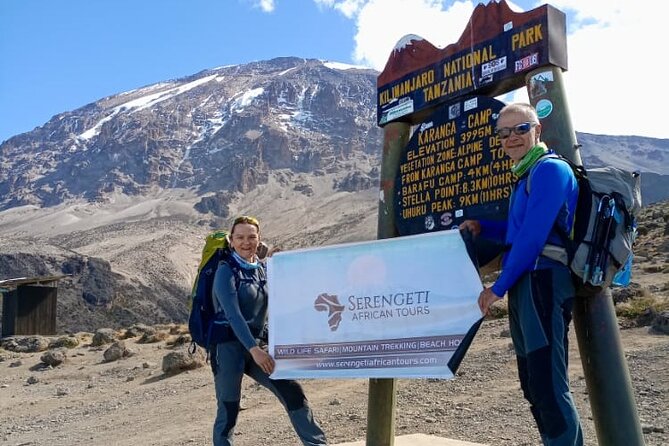
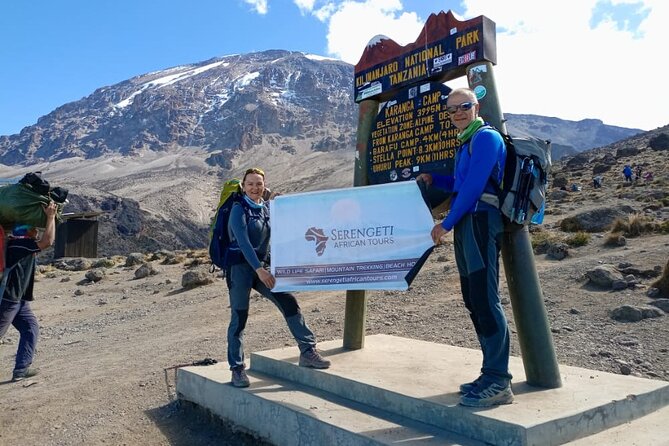
Day 4 is built around acclimatization and movement rather than max altitude. You hike about 4–5 hours and roughly 5 km through alpine desert terrain.
The highlight is Great Barranco Wall. It looks intimidating at first glance, but it’s described as a Class 2 hike and usually easier than people anticipate. At the top, you can get views of Heim Glacier and you may be above the clouds.
Then you continue into the Karanga Valley, with trail ups and downs that keep you working but not constantly exploding your effort. This is a great day for steady pacing and conserving energy, because you’re building toward the higher, colder camps without burning yourself out.
Barafu Camp (4,550 m): wind, rocks, and your last easy water reality
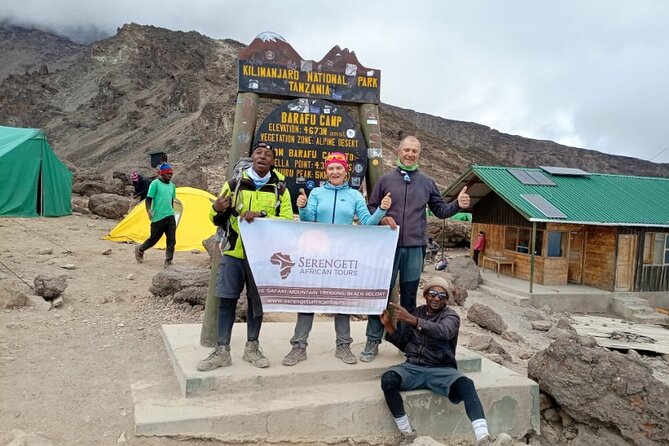
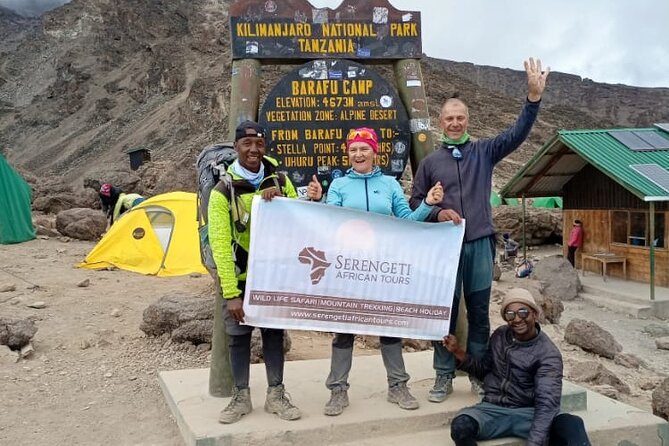
On Day 5, you leave Karanga Camp (3,959 m) and intersect with the Mweka Route, which you’ll use on the final descent days. After about an hour of hiking, you reach Barafu Hut, around 4,550 m.
This is a shorter hiking day—about 2–3 hours over roughly 4 km. But it matters because it sets you up for the summit night.
Water is the big practical detail here: Barafu Camp has no accessible water, so it’s noted as the last water stop for porters. For you, that means you should be very intentional about hydration in the lead-up. Don’t wait until you’re thirsty on a ridge.
Camp conditions are also a factor. Barafu is an exposed rocky ridge. The tents can be hit by wind and rocks, so it’s smart to get familiar with the site layout before dark.
Summit night from Stella Point (5,685 m) to Uhuru Peak (5,895 m): the sunrise moment
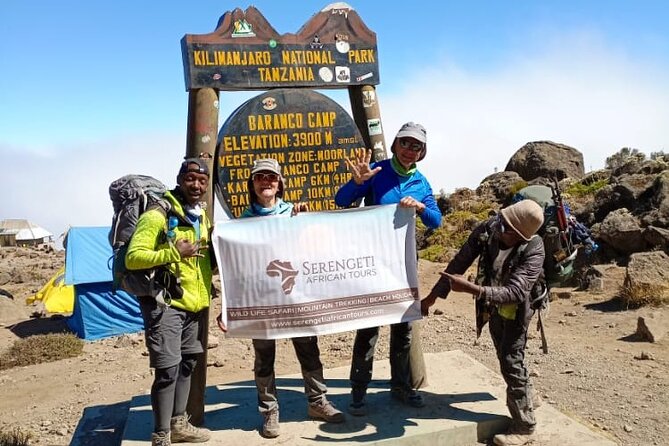
Day 6 is the long mental test: you rise around 23:30, take tea and biscuits, then start hiking at night. You head north-westerly and ascend through heavy scree toward Stella Point (5,685 m) on the crater rim.
This section—roughly 6 hours total on the day—is described as the most challenging stretch for many climbers, mentally and physically. Once you reach Stella Point, you stop briefly and may catch the magnificent sunrise, assuming weather cooperates.
After Stella, you typically encounter snow up to the next push and then hike about 2 hours to Uhuru Peak (5,895 m). The time at the summit depends on conditions, which usually means weather dictates your schedule more than your hunger does.
Practical advice: plan for cold hands, slowed breathing, and the urge to rush. Your best strategy is to move efficiently, not fast. Summit success is often more about steady decision-making than raw speed.
Mweka Gate and certificates: the emotional finish with structure
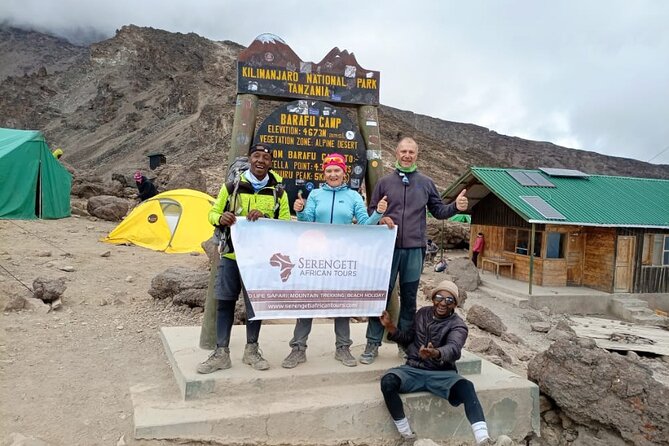
Day 7 starts with breakfast and a celebration—dancing and singing is part of the final day vibe. This is also when you present tips to your guide, assistant guides, chef(s), and porters.
Then you descend for about 3 hours to Mweka Gate, followed by an additional 1 hour into Mweka village (around 3 km). Before you’re done, the national park requires you to sign your name to receive a completion certificate.
There’s a neat way the certificates work here:
- Reaching Stella Point earns a green certificate
- Reaching Uhuru Peak earns a gold certificate
Even if you didn’t get the top, the structure of Day 7 still gives you closure. You’re not just stumbling downhill—you’re finishing with a clear, official end.
Food, tents, and camp setup: comfort that matters at altitude
One reason people keep coming back to this operator style is the camp practicality. You’re set up with quality waterproof, four-season private mountain sleeping tents. That doesn’t make Kilimanjaro warm, but it keeps wind and wet from ruining your recovery sleep.
You also get quality mess tents with table and chairs, which is a small luxury when you’re cold and hungry. Meals are included while on the mountain: breakfast (7), lunch (7), and dinners (6), plus the operation provides large portions of fresh, healthy nutritious food. There’s also clean, purified drinking water—important on a route where water access can be limited later in the climb.
Why this matters: on summit night and the days after, your performance depends on whether you can eat, drink, and sleep. This setup is designed to keep that loop working.
Guide and porter team: the human engine behind summit success
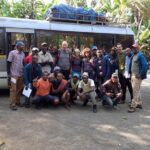
The Machame route can feel like it’s all about legs and lungs, but a lot of success comes down to management of effort and morale. This tour includes professional, experienced mountain guides and a porter team, with a stated focus on fair and ethical treatment of porters and rescue coverage.
From the feedback patterns around this operator, you’ll likely notice the same names showing up in people’s stories. The coordinator Lucas gets credited for fast communication and answering lots of questions. Guides such as James and David get mentioned for summit-focused support, and Gasto appears repeatedly as someone people trust on the mountain. Whether you see those exact names or not, the key takeaway for you is the tour’s emphasis on a coordinated crew rather than a hands-off plan.
Practical expectation: you’ll be guided on pace, acclimatization, and decision-making around symptoms. That kind of leadership can be the difference between pushing through discomfort and pushing into danger.
Price and value at $2,300: what you’re paying for and what you’re not
At $2,300 per person, this is not a budget hike. But compare it to what’s actually covered on Kilimanjaro: the tour includes all park fees and rescue fees, all meals on the mountain, private waterproof tents, quality mess tents, and clean purified water. It also includes guides and the mountain operation needed to move camp-to-camp.
That’s why the cost can make sense: a big portion of your money supports infrastructure and risk management, not just someone leading you up a trail.
What’s not included:
- Tips
- Flights
- Personal climbing gear
For value, the best move is to treat tips as part of your real trip budget from the start. Even if the official cost looks fixed, the mountain culture expects you to reward the team at the end.
Should you book the 7-day Machame (Whiskey) climb?
You should book if:
- you’re ready for a steep, difficult route with a shorter schedule
- you can handle multi-hour hiking days and cold nights
- you want the scenic variety of Machame plus the classic summit sunrise plan
- you value a team-based operation with structured camp support
You might think twice if:
- you’re new to hiking and altitude and lack conditioning
- you know you struggle with wet, slippery trails (Day 1 can be muddy fast)
- you’re uncomfortable with the idea that summit day depends on weather and may run cold and slow
If you go, go prepared: bring layers, expect cold and wind, hydrate intentionally (especially since Barafu is the last accessible water point), and keep your pace controlled. Kilimanjaro is short on mercy, but it’s good at rewarding calm persistence.
FAQ
Where does this Kilimanjaro climb start?
It starts in Arusha, Tanzania, and the activity ends back at the meeting point.
How long is the Machame route climb?
The duration is 7 days (approx.).
How much does the tour cost?
The price is $2,300.00 per person.
Is pickup offered from Arusha?
Yes, pickup is offered from Arusha to the start of the climb.
What route is this, and where does it hike?
This is the Kilimanjaro National Park climb via the Machame route, also known as the Whiskey route.
What’s included in the price?
Included are park fees and rescue fees, professional mountain guides, private waterproof four-season tents, all meals on the mountain, quality mess tents, and clean purified drinking water.
What is not included?
Not included are tips, flights, and personal climbing gear.
What group size is this tour limited to?
It has a maximum of 16 travelers.
When does the summit attempt happen?
You rise around 23:30 on the summit night, hike toward Stella Point (5,685 m), then continue to Uhuru Peak (5,895 m) depending on weather.
What certificates do you get at the end?
You sign for certificates at the finish. You receive a green certificate for reaching Stella Point and a gold certificate for reaching Uhuru Peak.
What is the cancellation policy?
There is free cancellation. You can cancel up to 24 hours in advance for a full refund.