REVIEW · ARUSHA
KILIMANJARO MACHAME ROUTE, (Climb 7days) “Whiskey” route
Book on Viator →Operated by Guide Private · Bookable on Viator
Kilimanjaro starts with a rainforest slog. This 7-day Machame (Whiskey) Route is interesting because you walk through major habitat zones—from rain forest to heath to alpine desert to arctic—while building altitude step by step for acclimatization and ending with a midnight summit attempt and sunrise near Stella Point. You also get a private setup, plus pickup offered, so the whole climb feels organized from the first drive to the last descent.
What I like most is the human side: the team behind the trek is led by Paul, and the care level is the real selling point. In the reviews, Paul and his team are described as giving exceptional attention, and they can cater for gluten-free diets, which matters if you have food needs.
The second big win is the pacing plan. You’ll get a shorter acclimatization day (on the way up), then you rest at Barafu Camp before the hardest night, so you’re not just rushing uphill. The possible drawback is that Day 6 is mentally and physically brutal: a midnight push to Uhuru Peak means extreme cold and wind at very high altitude, plus a long day that keeps going after the sunrise.
In This Review
- Key highlights I’d circle on this Machame Whiskey climb
- Why the Machame Whiskey Route feels like a classic Kilimanjaro climb
- Price and logistics: what you’re really paying for at $2,564.11
- Day 1: Machame Gate to Machame Camp through rain forest
- Day 2: Shira 2 Camp and the shift into heath and moorland
- Day 3: Lava Tower to Barranco Camp, high altitude then a controlled drop
- Day 4: Karanga Camp, the shorter acclimatization day and nearly 900 ft of climbing
- Day 5: Barafu Camp and the end of the southern circuit with summit angles
- Day 6: midnight to Uhuru Peak, Stella Point sunrise, then down to Mweka Camp
- Day 7: Mweka Camp to Mweka Gate, certificates, then the drive back
- Support on the mountain: Paul’s team care (and gluten-free meals)
- Fitness, pacing, and weather reality on Kilimanjaro
- Who should book this Machame Whiskey 7-day climb
- Should you book this Machame Whiskey route?
Key highlights I’d circle on this Machame Whiskey climb
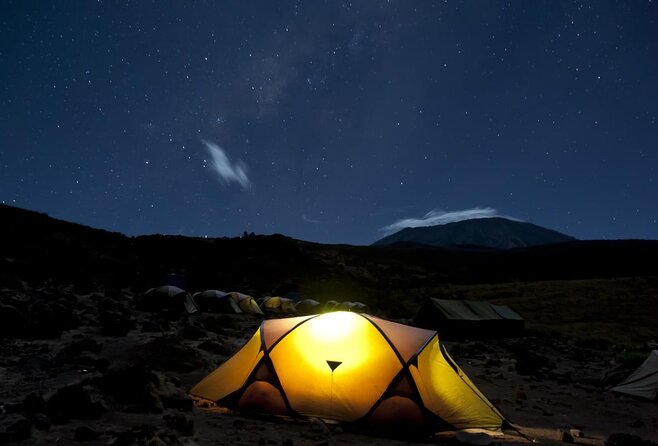
- Private group experience on a structured 7-day route (only your group participates)
- Major altitude and habitat changes, from rain forest to arctic, with camps planned around acclimatization
- Summit timing that sets up sunrise near Stella Point (around 18,900 ft)
- Paul’s team support, including strong care and attention on the mountain
- Gluten-free dietary support reported by past climbers
- Park access included across the route (with admissions handled during the trek)
Why the Machame Whiskey Route feels like a classic Kilimanjaro climb
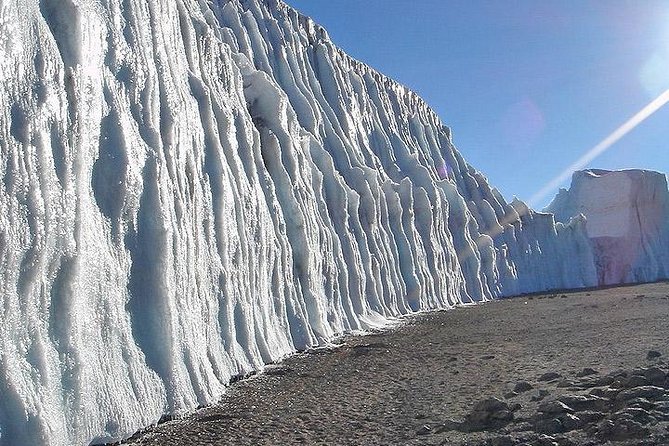
The Machame route is popular for a reason: it mixes steady uphill sections with real variety in what you’re walking through. One day you’re climbing in rain forest on a winding trail up a ridge; another day you’re on moorland and heather; later you’re dealing with alpine desert terrain and then the arctic conditions near the summit.
The “Whiskey” name isn’t the point. What matters is the shape of the climb: you gain altitude, drop down in the middle to help your body adapt, then you build again toward Barafu and the summit night. If you want a trek that feels like progress (instead of nonstop suffering), this schedule is designed to support that.
You can also read our reviews of more tours and experiences in Arusha.
Price and logistics: what you’re really paying for at $2,564.11
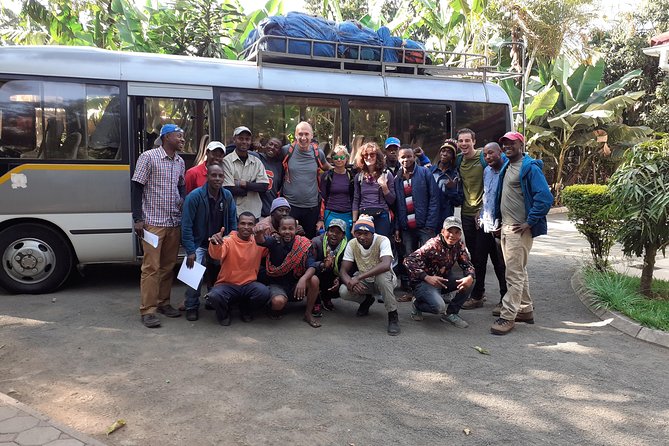
At $2,564.11 per person, this isn’t a budget add-on. You’re paying for a private guided climb with a team that handles the hard parts: logistics, camp staging at established points, and the day-by-day movement between zones on the mountain.
This price also pairs well with a couple practical inclusions shown in the trek plan. You’ll have park admission handled during the climb (admission ticket included on Day 1, and listed as free on several other days), and you’re told that pickup is offered. You’ll also receive a mobile ticket, which is helpful if you want fewer printed documents to chase around.
The trade-off is simple: you’re paying for safety-minded organization and human support, and that only works if you show up ready for altitude. If you’re looking for an easy walking vacation, Kilimanjaro is not that.
Day 1: Machame Gate to Machame Camp through rain forest
Your climb starts with a drive of about 50 minutes from Moshi to Machame Gate. You pass through the village of Machame on the lower slopes, then head into the park where the trail immediately turns into dense rain forest.
From there, it’s a winding trail up a ridge to Machame Camp. You’ll climb from about 5,380 ft to 9,350 ft over 11 km (7 miles) with an estimated 5–7 hours of hiking time. Day 1 is the “find your rhythm” day, even though it’s not easy.
What this means for you: don’t treat the first day like a race. The higher you go, the more your breathing needs to slow down. Also, rain forest terrain can mean humidity and slick ground—so steady steps beat fast steps.
Day 2: Shira 2 Camp and the shift into heath and moorland
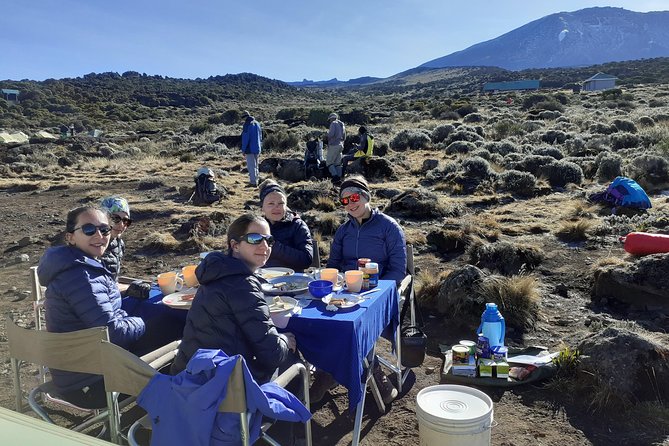
Day 2 is where you leave the rain forest glades. You climb from 9,350 ft to 12,500 ft, only about 5 km (3 miles), but it still takes 4–6 hours because the path becomes a steep, rocky ridge.
Once you reach the Shira Plateau, you transition into heather and open moorlands. The route also includes a crossing of a large river gorge, which is one of those moments that changes the feel of a trek—less “just uphill,” more “move through a dramatic feature of the mountain.”
Why Day 2 matters for acclimatization: you gain a lot of altitude over a shorter distance. If you start Day 2 breathing hard, slow down. The goal is to get to Shira 2 without exhausting yourself so much that you can’t recover for the next day.
Day 3: Lava Tower to Barranco Camp, high altitude then a controlled drop
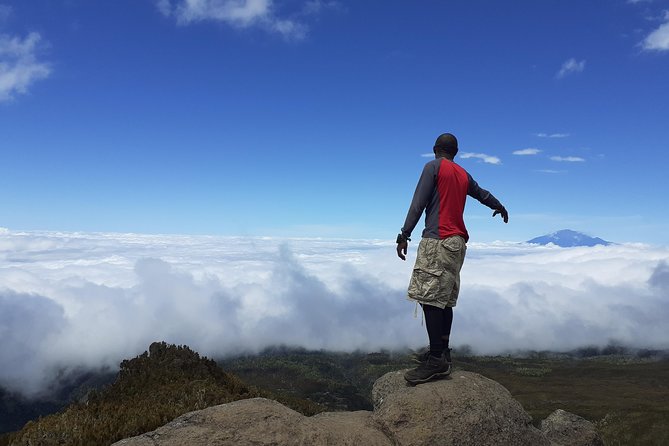
Day 3 is a classic Kilimanjaro feel: go high, then come down to help your body adapt. First, you head to Lava Tower from about 12,500 ft to 15,190 ft. It’s 7 km (4 miles) and 4–5 hours, and you walk through alpine desert terrain.
Lava Tower itself is a volcanic rock formation about 300 ft tall, so it becomes a natural landmark as you push upward. After that, you descend toward Barranco Camp, dropping to around 13,044 ft. The descent is shorter—about 3 km (2 miles), 2–3 hours—and you pass through the Senecio Forest, which has a surreal, otherworldly look.
A key point here: even though you’re ending Day 3 lower, you’re spending meaningful time at higher altitude. That timing matters because acclimatization is as much about the “up-high exposure” as it is about where you sleep.
Day 4: Karanga Camp, the shorter acclimatization day and nearly 900 ft of climbing
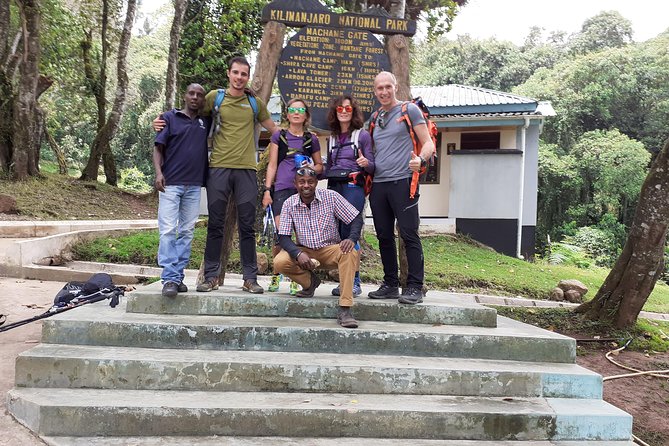
Day 4 is described as a shorter day, and you’ll feel why once you understand the route profile. You start around 13,044 ft, climb to about 13,106 ft, and hike 5 km (3 miles) with 4–5 hours of walking.
You begin by descending into a ravine to the base of the Great Barranco Wall. Then comes the work: a non-technical but steep climb of nearly 900 ft to reach the top. After crossing hills and valleys, you descend sharply into Karanga Valley and reach Karanga Camp.
This day is a trade: you’re not gaining much altitude overall, but you’re training your legs and giving your body a chance to adjust. If you come into Day 4 tired from earlier days, this is also when good pacing and steady breathing make a big difference.
Day 5: Barafu Camp and the end of the southern circuit with summit angles
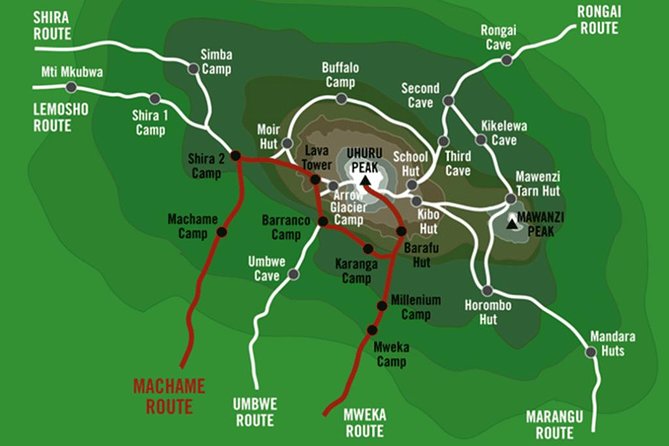
Day 5 moves you toward the summit zone, but it still keeps a practical structure. You travel from 13,106 ft to 15,331 ft over 4 km (2 miles) with about 4–5 hours of hiking.
You hit a junction that connects with the Mweka Trail, then continue up a rocky section to Barafu Hut (your camp for the night). This day is notable because you’ve completed the Southern Circuit, and the route sets up views of the summit from different angles.
At Barafu Camp, you rest, eat early, and prepare for summit night. From this position, the trek notes that you can see Mawenzi and Kibo—and that’s the kind of visual reminder that helps you mentally commit to the next day’s challenge.
Day 6: midnight to Uhuru Peak, Stella Point sunrise, then down to Mweka Camp
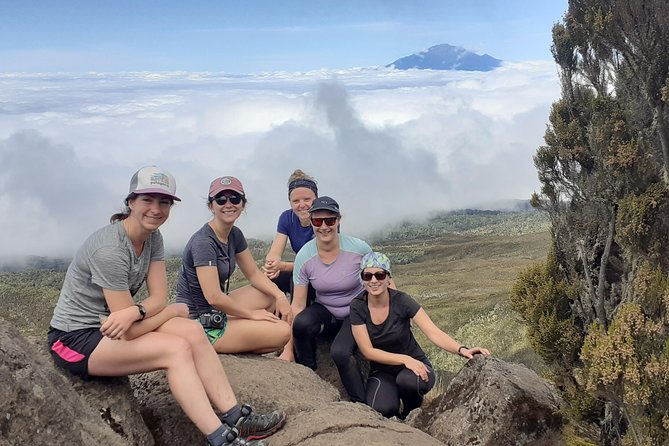
This is the hardest day by far. You start your push to the summit very early in the morning, around midnight. From Uhuru Peak to Mweka Camp, the route shows a climb from 15,331 ft to 19,341 ft over 5 km (3 miles) with 7–8 hours of hiking time, and then a descent from 19,341 ft to about 10,065 ft over 12 km (7 miles) with 4–6 hours.
The trek notes that wind and cold can be extreme at this elevation and time of day. Translation: even if you feel okay on the walk, your body is under a double load—oxygen thinning plus temperature drop.
Near Stella Point (around 18,900 ft), you’re set up for the sunrise. The climb describes it as the most magnificent sunrise you’re likely to see, coming over Mawenzi. That’s the moment when the waiting and the cold start to feel worth it.
After the summit, you don’t get an easy victory lap. You keep moving down toward Mweka Camp through rain forest, which can mean slick ground after dark if conditions are damp. The best summit days often depend on the downhill attitude: celebrate, but keep your feet safe and your steps controlled.
Day 7: Mweka Camp to Mweka Gate, certificates, then the drive back
On Day 7, you’re in full descent mode. You go from 10,065 ft to 5,380 ft over 10 km (6 miles) in about 3–4 hours. The habitat shifts back into rain forest, and the trek notes that at lower elevations it can be wet and muddy.
You’ll reach Mweka Gate, collect summit certificates, and then continue about another hour to Mweka Village. From there, a vehicle meets you to drive back to your hotel in Moshi/Arusha.
What you’ll likely remember most about this day: your body feels different than it did on the earlier climbs. Your challenge is mostly your legs and balance. Take your time. Mud punishes rushing.
Support on the mountain: Paul’s team care (and gluten-free meals)
This is one of those climbs where support matters as much as route design. The operator describes a team of experienced people across tourism roles, and the guides and cooks are repeatedly mentioned for hospitality, kindness, and attention.
The review feedback is especially clear about Paul and his team. Past climbers say Paul is superb, with exceptional care and attention, and that he’s able to accommodate a gluten-free diet. If you’ve ever had to gamble with food on a big trek, that detail is not small—it can mean the difference between feeling steady and feeling anxious.
Private also changes the feel. Since it’s a private tour/activity, you won’t be dealing with mismatched group pacing. Your team can focus on your needs, your pace, and your acclimatization rhythm.
Fitness, pacing, and weather reality on Kilimanjaro
The trek calls for moderate physical fitness. That doesn’t mean you need to be an athlete. It means you should already be comfortable with multi-hour hikes, using your breathing to slow down when altitude kicks in.
Here’s what the schedule tells you about pacing:
- Day 1 is a steep start in rain forest (5–7 hours over 11 km).
- Day 2 climbs a lot in a short distance (4–6 hours over 5 km).
- Day 5 sets you up for summit night and includes an early dinner at Barafu.
- Day 6 is the defining test: a midnight climb up to Uhuru Peak (7–8 hours) and then a long descent (4–6 hours).
Weather is part of the deal. The plan requires good weather for the experience to go forward, and if weather conditions interfere, you’ll be offered a different date or a full refund. That’s not a minor detail—on Kilimanjaro, conditions change safety and comfort quickly.
Who should book this Machame Whiskey 7-day climb
This climb is a strong fit if you:
- Want a private guided trek with a team that shows up for you day after day
- Like a route with clear acclimatization logic (including a shorter day before the summit night)
- Are comfortable with a demanding summit push in cold, windy conditions
- Need special dietary support like gluten-free options
It’s probably not the best match if you:
- Can’t handle a midnight start and a long, high-altitude day
- Want a walk that stays comfortable all the way through
- Are hoping for a short, low-stress itinerary
Should you book this Machame Whiskey route?
If you’re aiming for Kilimanjaro that feels organized, cared for, and built around acclimatization—not just “good luck”—this Machame Whiskey climb is a solid choice. The combination of a structured itinerary, strong team attention led by Paul, and support for gluten-free diets makes it feel more like a guided plan than a gamble.
Book it if you’re ready for the big reality check on Day 6: cold, wind, and a very demanding climb to Uhuru Peak. Skip it if that midnight summit day sounds like a deal-breaker for your comfort level.