REVIEW · NEW ORLEANS
French Quarter: Jackson Square to Bourbon Street Tour
Book on GetYourGuide →Operated by Tours by Foot · Bookable on GetYourGuide
Strolls like this are the secret weapon when time is short. This French Quarter tour turns a quick walk into a clear story of New Orleans, starting at Jackson Square and ending on Bourbon Street.
I especially like how the route spotlights St. Louis Cathedral and the surrounding public spaces, so you see the Quarter as more than a party strip. The architecture gives you a real anchor point for everything else you notice.
I also love the literary thread running through the side streets. You’ll pass the William Faulkner House bookstore and see the Tennessee Williams site tied to A Streetcar Named Desire, plus pirate legends linked to Jean Lafitte. The result feels like you’re learning why these streets matter, not just where to stand for photos.
One possible drawback: 30 minutes is brief, so the pacing can feel brisk. You’ll get strong highlights, but you won’t have time for long museum browsing beyond the Presbytere ticket stop.
In This Review
- Key Things to Know Before You Go
- A 30-Minute French Quarter Route That Doesn’t Waste Your Time
- Jackson Square Start: The View That Sets the Tone
- St. Louis Cathedral and the Cabildo: Religion Meets the Louisiana Purchase Story
- Presbytere Tickets: Mardi Gras (and Katrina) Context Before You Wander
- Pirate Alley to Lafitte Blacksmith Shop: Myths Placed on Real Street Corners
- Faulkner and Tennessee Williams on Side Streets
- Bourbon Street at Human Speed: What You Should Notice
- Price and Value: Why $39 Works for This Specific Itinerary
- Who This Tour Is For (and Who Should Skip It)
- Should You Book This French Quarter Tour?
- FAQ
- Where is the meeting point for the tour?
- How long is the French Quarter: Jackson Square to Bourbon Street Tour?
- Is the tour offered in English?
- What attractions are included on the walk?
- Are tickets to the Presbytere Museum included?
- Does the tour help you avoid the ticket line?
- How much does the tour cost?
- When is this tour usually available?
- Is free cancellation available?
Key Things to Know Before You Go
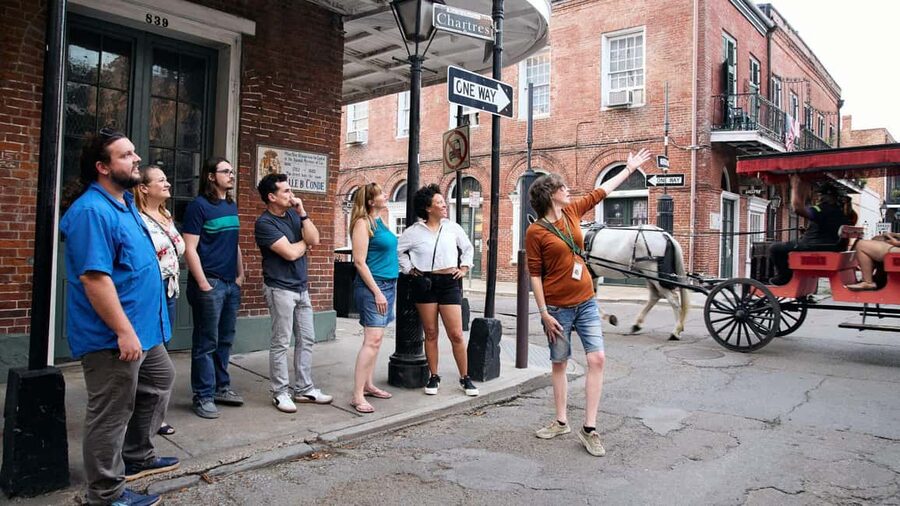
- Meet at Andrew Jackson Statue in the center of Jackson Square, which makes it easy to find if you’re already in the area.
- St. Louis Cathedral and Jackson Square give you context right away, before Bourbon Street takes over the vibe.
- Presbytere tickets are included, with exhibits tied to Mardi Gras and Hurricane Katrina.
- Pirate Alley + Lafitte Blacksmith Shop connect real places to pirate folklore and Jean Lafitte.
- Faulkner and Tennessee Williams stops bring a literature angle that most Quarter walks skip.
- Bourbon Street included, so you’ll see it with an explanation, not just noise and crowds.
A 30-Minute French Quarter Route That Doesn’t Waste Your Time
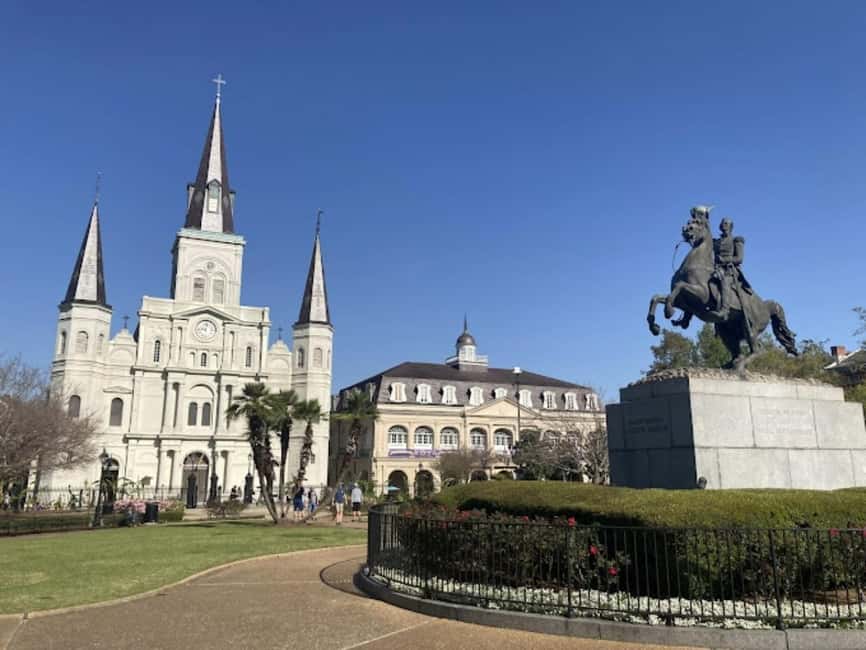
If you only have a sliver of time in New Orleans, you still want the Quarter to make sense. This tour is built for that. At just 30 minutes, you cover major landmarks on foot and get a guide’s perspective while you’re there.
It also has a practical structure: it starts in a civic heart (Jackson Square), moves into the religious and colonial story (cathedral, Cabildo, Presbytere), then follows culture and myth into the alleyways (Pirate Alley, literary houses, pirate-linked sites), and finally lands where most people’s instincts take over—Bourbon Street.
The price—$39 per person—is not “cheap,” but the value comes from what’s included. You get a certified professional guide, and you also get tickets to the Presbytere Museum with a skip-the-line advantage.
You can also read our reviews of more tours and experiences in New Orleans.



Jackson Square Start: The View That Sets the Tone
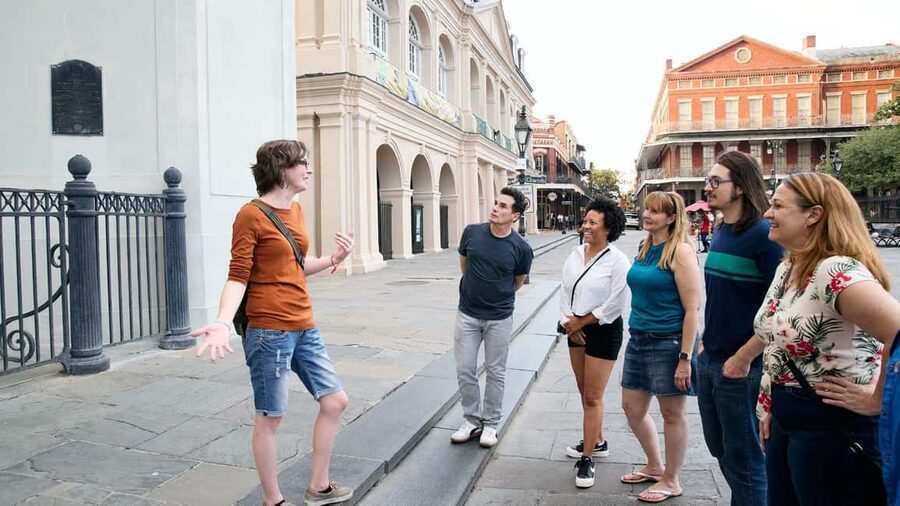
Your tour meets at the Andrew Jackson Statue in the center of Jackson Square. That’s a smart start point because Jackson Square is one of the easiest places in the French Quarter to orient yourself. Even if you’re arriving from a side street, you can usually circle back toward the square without much effort.
From there, your guide’s story helps you read what you’re seeing. Jackson Square isn’t just a pretty public space for street performers and photos—it’s been a focal point since the 18th century. That time depth matters because the French Quarter’s streets make more sense when you understand that the city built its core here.
I also like how this start nudges you away from a single-theme approach. Yes, Bourbon Street exists. But beginning at Jackson Square signals that the tour will look at the Quarter as a real neighborhood with roots, not just an entertainment corridor.
St. Louis Cathedral and the Cabildo: Religion Meets the Louisiana Purchase Story
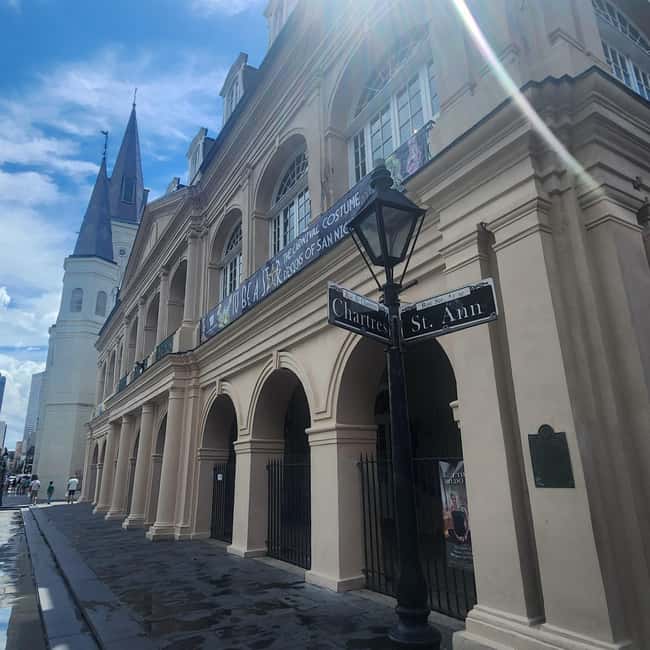
A big highlight is the St. Louis Cathedral, one of the oldest cathedrals in the United States. The point isn’t only the building itself—though it’s impressive—but how it frames the Quarter’s identity. In a place where culture mixes so many influences, the cathedral represents a long-running thread of Catholic heritage.
From there you also hit the Cabildo, tied to a major turning point in U.S. history. The Cabildo is where the Louisiana Purchase was signed. Even if you learned that in a textbook years ago, seeing the place makes it feel less abstract. It gives you a sense of how political change and city life intersected right here.
One tradeoff to keep in mind: this is still a short walk. So you’ll get strong orientation and key facts, but you won’t linger for a deep dive at every building. The payoff is momentum—you’ll be able to keep walking and actually enjoy the Quarter rather than getting stuck in planning mode.
Presbytere Tickets: Mardi Gras (and Katrina) Context Before You Wander
You’ll explore the Presbytere, and this is where the tour earns its keep if you want more than postcard detail. The Presbytere originally related to clergy residence, and now it hosts exhibits specifically about Mardi Gras and Hurricane Katrina.
What I like about including this stop is that it adds emotional and cultural context. Mardi Gras isn’t only costumes and beads; it’s a tradition with history behind it. Pair that with exhibits tied to Hurricane Katrina, and you start to understand how the city’s identity includes resilience, not just celebration.
Another practical win: you get tickets included to the Presbytere Museum and the tour notes a skip-the-ticket-line benefit. That matters because museum lines in busy areas can stretch time fast—especially if your day is already packed.
Pirate Alley to Lafitte Blacksmith Shop: Myths Placed on Real Street Corners
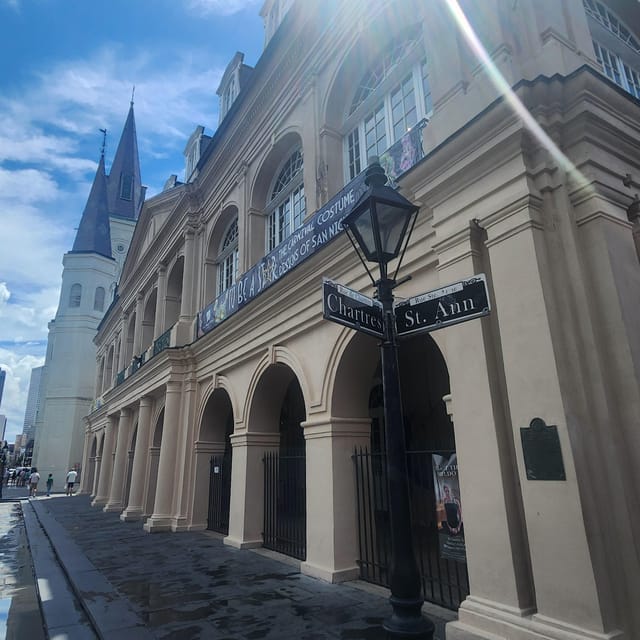
Then the tour turns toward the narrow side streets, starting with Pirate Alley. This alley is known for stories of pirate lore and literary legends, which is exactly the kind of connection that makes walking tours feel fun instead of purely educational.
From Pirate Alley, you also conclude at the Lafitte Blacksmith Shop, described as one of the oldest surviving structures in New Orleans and linked to pirate Jean Lafitte. This is where the Quarter’s legends stop being vague. You can point at the street and the building and think, yes—this is the physical backdrop for the stories people keep repeating.
I also like the way pirate lore blends with literary connections later in the route. You’re not just hearing one theme; you’re watching the Quarter’s storytelling culture braid together real places and imagination.


Faulkner and Tennessee Williams on Side Streets
If you enjoy authors and not just architecture, you’ll appreciate the literature stops. The tour includes the former residence of William Faulkner, now a bookstore filled with rare and classic books. Even if you don’t buy anything, a stop like this changes how you see the neighborhood. It turns the Quarter into a lived-in place that attracted big voices, not only tourists.
You’ll also see the Tennessee Williams house, associated with writing A Streetcar Named Desire. That connection gives you a fresh lens while you later walk toward Bourbon Street. Suddenly the Quarter isn’t just a setting; it’s a character that shaped stories.
This is one of the most praised parts of the experience. People consistently point to how enjoyable it is to connect favorite books to actual New Orleans locations. If your trip includes literature, theater, or just strong storylines, these stops are a smart reason to choose this tour over a more generic walk.
Bourbon Street at Human Speed: What You Should Notice

No French Quarter walk feels complete without Bourbon Street, and this one includes it. But the value is that you’re not standing there blindly. You’re walking in with context—after cathedral and history, after Presbytere and pirate lore, after Faulkner and Tennessee Williams—so Bourbon Street becomes the payoff instead of the only chapter.
What to watch for: the contrast in atmosphere. Bourbon Street is where energy spikes and the street becomes entertainment-first. After the quieter, story-driven stops, you’ll notice how fast the Quarter shifts from heritage spaces into nightlife.
If you’re sensitive to crowds or noise, consider timing. The tour notes it’s usually available in the morning, which can help you get the Quarter’s texture before the busiest party hours fully roll in. And even on a morning start, keep your expectations practical: Bourbon Street is still Bourbon Street.
Price and Value: Why $39 Works for This Specific Itinerary
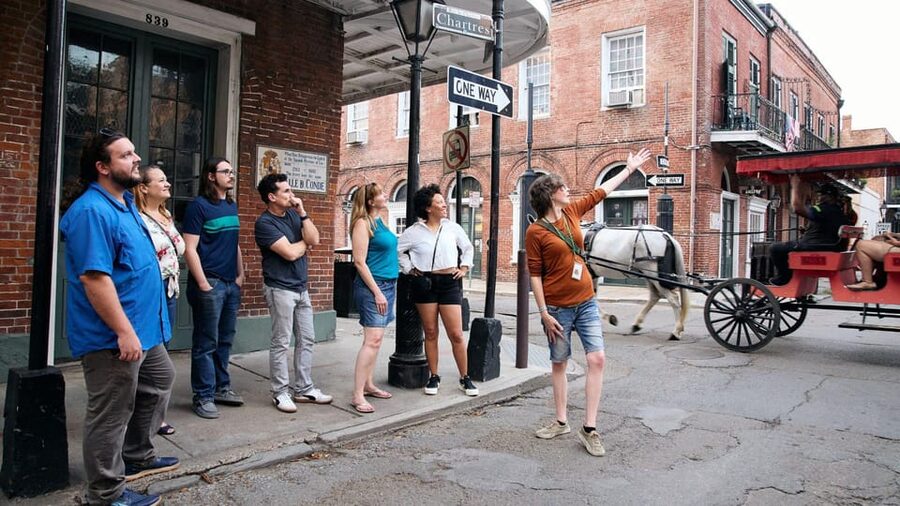
Let’s talk about value directly. At $39 per person for 30 minutes, you’re paying for three things:
- a certified professional guide
- a structured route that hits major landmarks quickly
- Presbytere museum tickets, with skip-the-line noted
If you tried to replicate this on your own, you’d need time to plan what to see, and you’d still have to figure out how to connect the dots between colonial buildings, Mardi Gras context, pirate lore, and literature sites. The tour’s tight timing reduces that mental load.
That said, this is not a “stay in one museum all afternoon” type of experience. If you want slow strolling, long indoor viewing, and unhurried exploration, you might feel you’re moving faster than you prefer. The best match is someone who wants a high-impact orientation and then continues exploring independently with clearer direction.
Who This Tour Is For (and Who Should Skip It)
This tour fits you best if you:
- have limited time in the French Quarter but want more than party vibes
- like your sightseeing explained, especially with history and culture context
- enjoy literature and want it connected to real places
- want a short visit that includes the Presbytere rather than leaving it for later
You might choose something else if you:
- plan to spend most of your day inside museums (because 30 minutes is brief)
- want a deep, stop-by-stop architectural tour where you linger at every detail
- prefer a nightlife-heavy tour focused mainly on Bourbon Street
Should You Book This French Quarter Tour?
I’d book it if you’re aiming for smart coverage with real context. The route gives you a strong backbone—Jackson Square and St. Louis Cathedral, then the Cabildo and Presbytere (with Mardi Gras and Katrina context), then the storytelling turn into Pirate Alley, the William Faulkner and Tennessee Williams connections, and finally Bourbon Street with an explanation behind what you’re seeing.
If you’re on a tight schedule and want the Quarter to feel understandable, not chaotic, this is a solid choice. If you hate brisk pacing, consider whether a longer tour (or adding extra museum time on your own) matches your style better.
FAQ
Where is the meeting point for the tour?
Meet your guide at the Andrew Jackson Statue in the center of Jackson Square.
How long is the French Quarter: Jackson Square to Bourbon Street Tour?
The tour lasts 30 minutes.
Is the tour offered in English?
Yes, the live tour guide speaks English.
What attractions are included on the walk?
The stops listed include Jackson Square, St. Louis Cathedral, the Cabildo, Presbytere, Pirate Alley, the William Faulkner House, the Tennessee Williams House, Bourbon Street, and Lafitte Blacksmith Shop.
Are tickets to the Presbytere Museum included?
Yes. Tickets to the Presbytere Museum are included.
Does the tour help you avoid the ticket line?
Yes, it notes skipping the ticket line.
How much does the tour cost?
The price is $39 per person.
When is this tour usually available?
It’s usually available in the morning.
Is free cancellation available?
Yes. You can cancel up to 24 hours in advance for a full refund.