REVIEW · BROOKLYN
Top Shelf Distillery Tour
Book on Viator →Operated by Kings County Distillery · Bookable on Viator
Brooklyn bourbon in just 75 minutes. This Top Shelf Distillery Tour at Kings County Distillery builds angel’s share storytelling and ends with a four-product tasting. I like the way they explain how oak mellows whiskey and adds color and deeper flavors, and I like that the tasting is structured enough for you to compare what you’re drinking. One heads-up: it’s non-refundable and depends on good weather.
You’re paying $32.66 for about 1 hour 15 minutes of guided time, and the tour group stays small (up to 30). On average, it’s booked about 5 days ahead, so if you’re aiming for a specific day, it helps to plan early. It also runs with an admission ticket and includes a tasting at the end—so you’re not just walking through rooms with no payoff.
The best part, at least based on the tour experience I’d expect from a setup like this, is the guide-led flow: history, production, then samples. One guide name that shows up clearly is Erica, and the tasting gets special praise for letting you explore the range without it feeling rushed.
In This Review
- Quick hits you’ll care about
- Why this Kings County Distillery tour is a smart use of time
- Finding the Gatehouses: the meeting point that keeps things simple
- Kings County’s Prohibition-era angle: what you learn before you taste
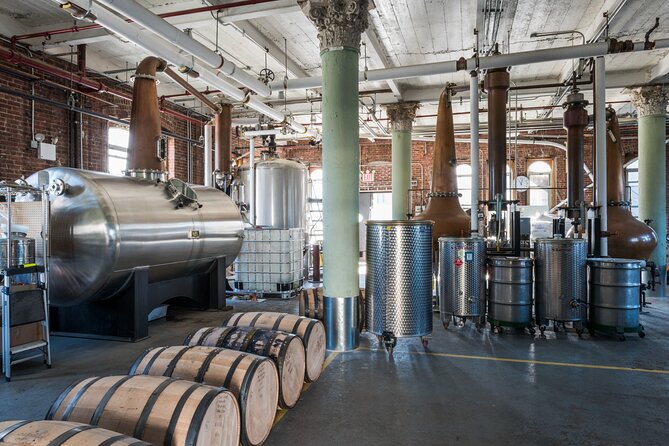
- Mashing, fermentation, and pot distillation—where the tour earns its keep
- The angel’s share barrel room: oak, color, and flavor you can taste
- The four-product tasting at the end: how to get more from your pours
- Price and value: what $32.66 buys you in real terms
- Who this tour fits best in Brooklyn (and who may not)
- Should you book the Top Shelf Distillery Tour?
- FAQ
- How long is the Top Shelf Distillery Tour?
- Where does the tour start and end?
- How much does the tour cost?
- Does the tour include a tasting?
- What is the main stop on the tour?
- How many people are in the group?
- Is the tour near public transportation?
- Are service animals allowed?
- When should I book if I want to go soon?
- Is the experience refundable or changeable?
Quick hits you’ll care about
- Prohibition-era framing: Kings County Distillery presents itself as the oldest whiskey distillery in New York City since Prohibition
- Clear production walk-through: mashing, fermentation, and pot distillation get explained in plain language
- Barrel-room stop: you hear about the angel’s share and how oak affects color and flavor
- End with a tasting: four products, with time to compare
- Small group size: maximum of 30 travelers for a more hands-on feel
Why this Kings County Distillery tour is a smart use of time
A lot of distillery tours go long—or they go vague. This one aims for a tight, useful rhythm: you get history and process, then you get samples before you’re sent back out the door. With 75 minutes on the clock, it works well if you want whiskey context without turning your day into a full afternoon plan.
I also like the structure because it’s built for real comparison. You’re not just tasting one thing; you’re tasting four products after you’ve been shown how the spirit is made and how aging changes it. That means when you taste, you have anchors in your brain: what fermentation contributed, what distillation did, and what oak might be doing in the barrel room.
One practical consideration: because the experience is weather-dependent and is non-refundable, you should only book if you’re comfortable with that risk. If your schedule is strict, I’d treat it like a “go if conditions cooperate” activity.
Finding the Gatehouses: the meeting point that keeps things simple
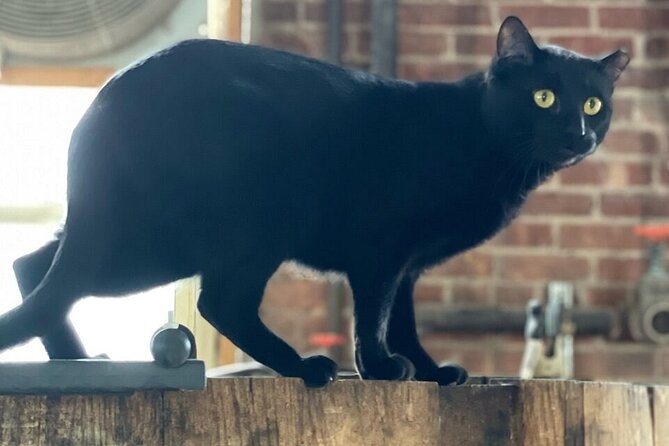
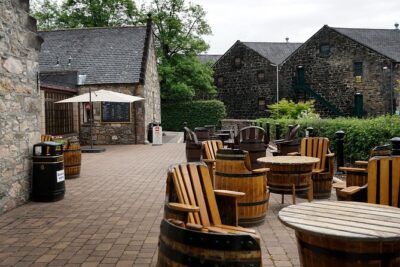
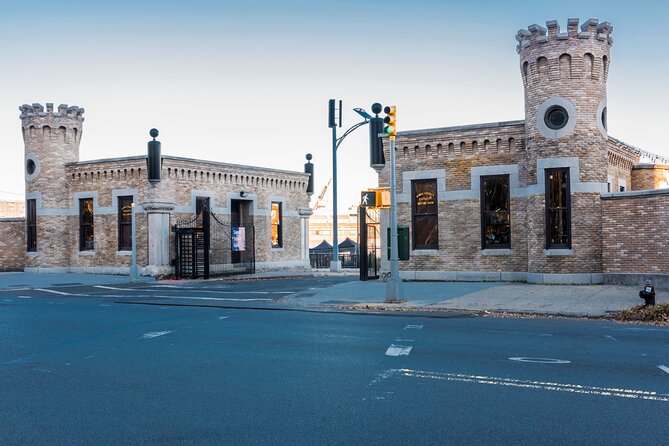
You start and end at the same place: The Gatehouses at Kings County Distillery, 299 Sands St, Brooklyn, NY 11205. That’s the kind of detail that saves stress—especially in a place where the biggest challenge is often just arriving on time.
This activity is listed as near public transportation, so you should be able to plan a straightforward arrival route. If you’re coming by transit, I’d still give yourself a little buffer. Distillery timing can be unforgiving once groups are ready to check in.
If you’re traveling with a service animal, it’s allowed on this tour. And since most travelers can participate, you likely won’t need to worry about complex physical barriers as long as you can handle a standard guided indoor tour pacing.
Kings County’s Prohibition-era angle: what you learn before you taste
The tour begins with Kings County Distillery’s story—how whiskey helped shape America and why Prohibition matters. Kings County describes itself as the oldest whiskey distillery in New York City since Prohibition, and that context isn’t just branding. It helps you understand why the production and aging steps you’ll see later are treated like craft, not factory noise.
The value for you is timing and framing. When someone explains why a place survived and evolved, the rest of the tour lands better. You’re not hearing random facts. You’re watching a living production system explained with a narrative that connects the past to the glass in your hand.
There’s also a practical benefit to starting with the “why.” Once you know the purpose behind the methods, the process parts—mashing, fermentation, pot distillation—make sense faster. If you’re the kind of person who likes to know the point before you learn the steps, you’ll probably enjoy this format.
Mashing, fermentation, and pot distillation—where the tour earns its keep
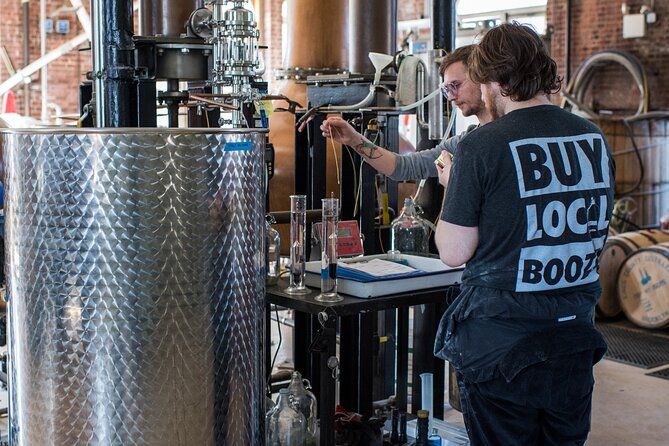
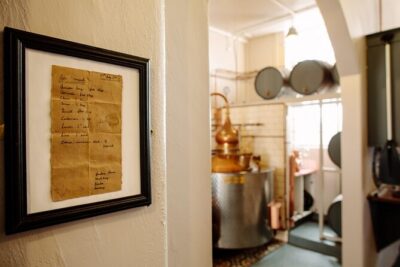
This is where the tour turns from story into how-it-works. You’ll get guided explanation of mashing, fermentation, and pot distillation—key stages that shape flavor, strength, and texture.
Here’s what that means in plain terms for your tasting:
- Mashing sets up what becomes available for fermentation, so it affects what flavors are even possible later.
- Fermentation turns sugars into alcohol, and it can influence aroma and how clean or complex the spirit feels.
- Pot distillation concentrates and refines—helping decide what you’ll actually notice in a glass.
I like that this isn’t presented like chemistry homework. The tour description calls it the science and magic of the process, which is a good sign that they’re giving you both the logic and the craft. That combination matters because it helps you avoid two common tasting mistakes: drinking without context, or trying to “decode” everything with no guidance.
If you’re new to whiskey, this section gives you a vocabulary you can use while you sample. If you already know whiskey, it still helps because you’re learning how this specific distillery thinks about the steps.
The angel’s share barrel room: oak, color, and flavor you can taste
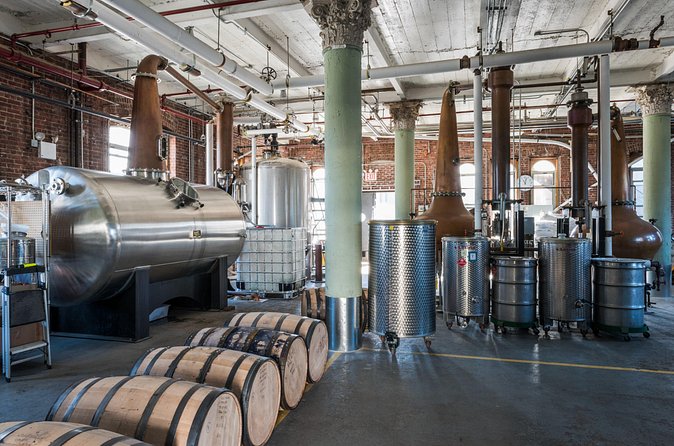
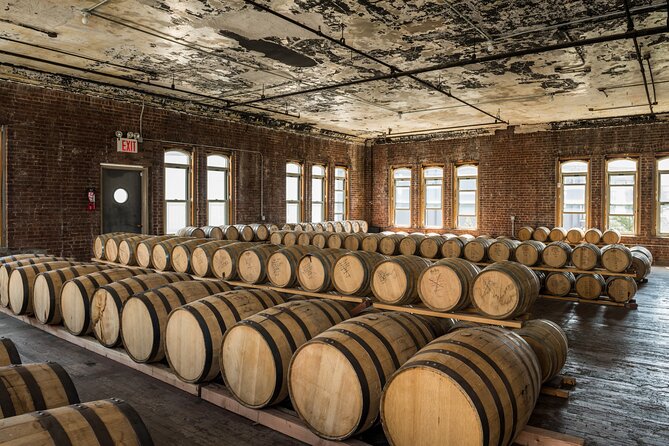
After you understand the making, the tour brings you to the barrel room concept of the angel’s share. This part is powerful because it reframes aging as an active process, not just time sitting in a warehouse.
You’ll learn how the spirit is mellowed by oak while it picks up color and develops deeper flavors. That matters for your tasting because it’s a direct explanation of why two whiskeys with the same general origin can taste different. Oak isn’t just a “container.” It’s part of the transformation.
I’d pay attention here, then immediately use that takeaway in the tasting. When you taste the four products at the end, you’ll likely notice how wood influence shows up as smoother edges, richer aromas, or changes in how sweet or spicy the finish feels.
Also, barrel-room moments tend to feel more immersive in a good way: fewer big lectures, more focused explanations tied to what’s happening in the barrels. That pacing is usually what makes whiskey tours memorable instead of forgettable.
The four-product tasting at the end: how to get more from your pours
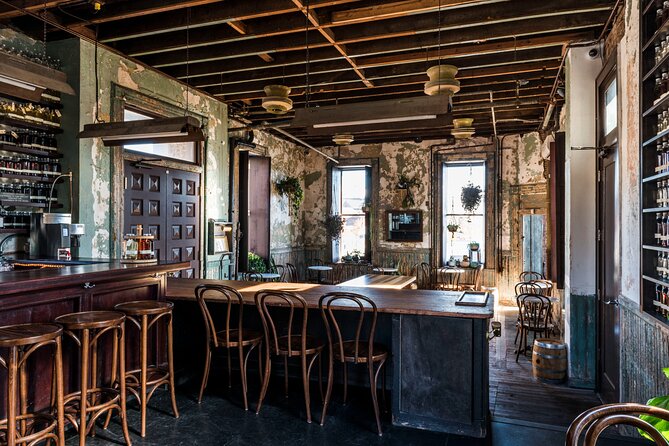
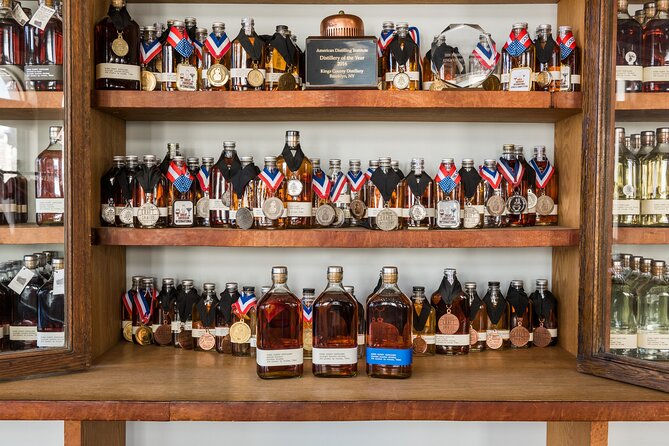
The tour ends with a tasting of four of Kings County’s products. The pacing—explain the process, then taste—is exactly what you want. It turns the tasting into a lesson you can feel in your mouth instead of a lecture you have to remember.
One guide name that stands out from the feedback you provided is Erica, praised specifically for the tasting. That’s a good indicator that the tasting isn’t just a passive sip-and-go. You should get guidance that helps you explore the range and notice differences across the lineup.
How I’d approach the four samples so you actually learn something:
- Start with the lightest-feeling sample first if the guide suggests a recommended order (or simply go from more subtle to bolder on your own).
- Take a short note in your head: aroma first, then sip, then finish.
- After the barrel-room talk, listen for how oak shows up—smoother texture, deeper vanilla or spice-like notes, and longer finishes.
And don’t feel pressured to be an expert. The tour is built so you can taste comparatively, even if you usually only have whiskey occasionally.
Price and value: what $32.66 buys you in real terms
At $32.66 per person, this is positioned as a short, structured distillery experience rather than a long, high-end seminar. For the money, you get three valuable pieces: guided context, a production walkthrough (mashing/fermentation/pot distillation), and a tasting of four products.
The value angle isn’t just the tasting. It’s that you learn what to pay attention to before you taste. Many tours skip that connection, leaving you to guess what you’re experiencing. Here, the barrel room and angel’s share concept set up a clear explanation for why wood aging changes what you’ll taste.
The group size also supports value. With a maximum of 30 travelers, it’s more likely you’ll get a guided, conversational feel rather than being one face in a crowd.
The trade-off is the weather dependency and the strict terms. If you can’t flex your schedule, this may feel less forgiving than you’d like.
Who this tour fits best in Brooklyn (and who may not)
This tour is a strong match if you want a whiskey experience that’s:
- Short enough to fit into a Brooklyn day plan
- Guided enough that you learn what you’re tasting
- Built around a tasting you can compare across four products
It’s also a decent choice for first-timers. The process is explained in a way that should give you a foundation quickly. And if you’ve had whiskey before, the barrel room concept and the steps behind distillation should help you sharpen your palate.
You might want to skip it if you dislike structured tastings or if your schedule can’t handle a weather-dependent, non-refundable booking. Also, since it’s one main stop plus tasting, it’s not for you if you’re looking for multiple locations or a long walking route around the facility.
Should you book the Top Shelf Distillery Tour?
Book it if you want a focused, whiskey-forward Brooklyn activity: the 75-minute format, the production explanation, and the four-product tasting work together better than “tour and then maybe you’ll taste something.”
I’d pass if you’re the type who needs full flexibility or you’re unsure about weather on your visit day. In that case, you may be better off holding off until you can commit.
If you do book, plan to go hungry for new context—not for food. Give yourself time to arrive at The Gatehouses (299 Sands St), then enjoy the pairing of story, process, and tasting in one smooth flow.
FAQ
How long is the Top Shelf Distillery Tour?
It lasts about 1 hour 15 minutes.
Where does the tour start and end?
It starts at The Gatehouses, Kings County Distillery, 299 Sands St, Brooklyn, NY 11205, and ends back at the same meeting point.
How much does the tour cost?
The price is $32.66 per person.
Does the tour include a tasting?
Yes. The tour ends with a tasting of four products.
What is the main stop on the tour?
The tour includes a guided visit at Kings County Distillery.
How many people are in the group?
The maximum group size is 30 travelers.
Is the tour near public transportation?
Yes, it is listed as near public transportation.
Are service animals allowed?
Yes, service animals are allowed.
When should I book if I want to go soon?
On average, it is booked 5 days in advance.
Is the experience refundable or changeable?
No. It is non-refundable and cannot be changed for any reason. If it’s canceled due to poor weather, you’ll be offered a different date or a full refund.