REVIEW · NAPLES
Naples: The Bourbon Tunnel Guided Tour with Entrance Ticket
Book on GetYourGuide →Operated by Galleria Borbonica · Bookable on GetYourGuide
Naples keeps secrets underground. The Bourbon Tunnel guided tour takes you beneath the city, tracing how one 1853 escape tunnel became a layered underground story, including WWII shelter life. You’ll hear the tunnel’s purpose shift over time, from Ferdinand II’s plans to later wartime use, and you’ll see what restoration efforts uncovered in the dark.
Two things I especially like: first, the tour gives you clear context for how the space changed purpose over centuries, not just a random walk underground. Second, the sights feel physical and specific, from fascist-period statues to an exhibition of old cars and motorcycles left behind for years. The main drawback to plan around is the climb in and out: there are 90 steep, narrow steps at the entrance, and 115 steps if you choose the Via delle Memorie option.
In This Review
- Key things I’d mark on your Naples list
- Bourbon Tunnel basics: what you’re actually stepping into
- Getting down there: Palazzo Serra di Cassano basement and the step reality
- What Ferdinand II meant: the original purpose you’ll hear about
- WWII rooms you can picture: hospital use, handwritten messages, and afterward
- Fascist-era statues and abandoned vehicles: why these stops hit
- The Via delle Memorie option: an extra underground walk carved into tuff
- How the guided storytelling lands: pace, Q&A, and real personalities
- Price and value for a 1-hour Bourbon Tunnel visit
- Exit and final details: what the end of the tour feels like
- Should you book the Bourbon Tunnel guided tour?
- FAQ
- How long is the Bourbon Tunnel guided tour?
- How much does the tour cost?
- What language is the live guide available in?
- Is there an entrance ticket included?
- What will I see inside the tunnel?
- What is the Via delle Memorie option?
- How many steps are there at the entrance?
- Where does the tour start?
- Is the group size small?
- Can children join?
Key things I’d mark on your Naples list
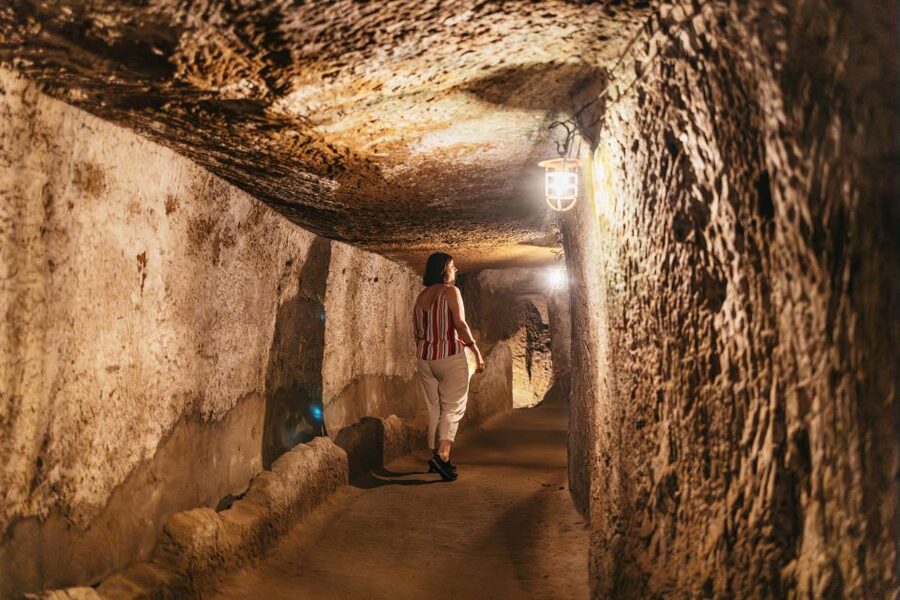
- Built in 1853 by Ferdinand II, originally intended as an escape route during unrest
- A WWII timeline you can walk through, including use as a military hospital and later the Hall Judicial Deposit
- Handwritten messages in the tunnels, including wishes and desolation left by people underground
- Fascist-period statues plus a display of cars and motorcycles, giving everyday scale to the story
- Optional Via delle Memorie, an underground route carved from the tuff (with extra steps)
- Small groups and guides who can answer questions in real time
Bourbon Tunnel basics: what you’re actually stepping into
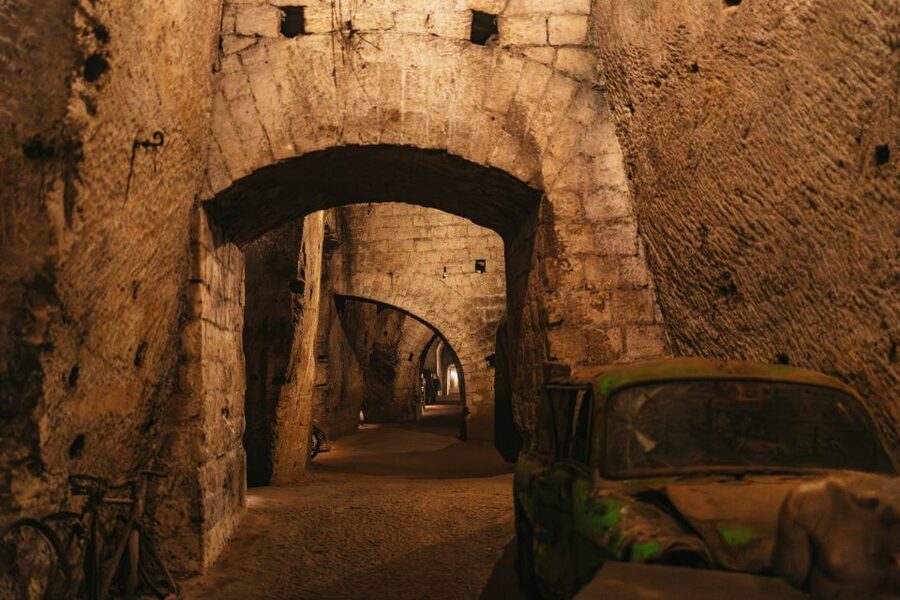
The Bourbon Tunnel was built in 1853 by Ferdinand II of Bourbon. The idea was urgent and personal: he wanted an escape route from the Royal Palace to the barracks area in Via della Pace, which you’ll also see referred to today as Via Morelli.
But the tunnel wasn’t finished as intended. Later, during World War II, the space found another purpose: it was used as a military hospital. After the war, it became the Hall Judicial Deposit. That constant change of use is the tour’s emotional engine. You’re not only seeing “an underground attraction.” You’re walking through a place that adapted to Naples as history pushed it around.
The tour also frames this as an emotional journey through the history of the city’s underground spaces. It’s a fast timeline, but the point lands: these tunnels weren’t staged for tourists. They were built, used, abandoned, and then slowly uncovered again.
You can also read our reviews of more tours and experiences in Naples.


Getting down there: Palazzo Serra di Cassano basement and the step reality
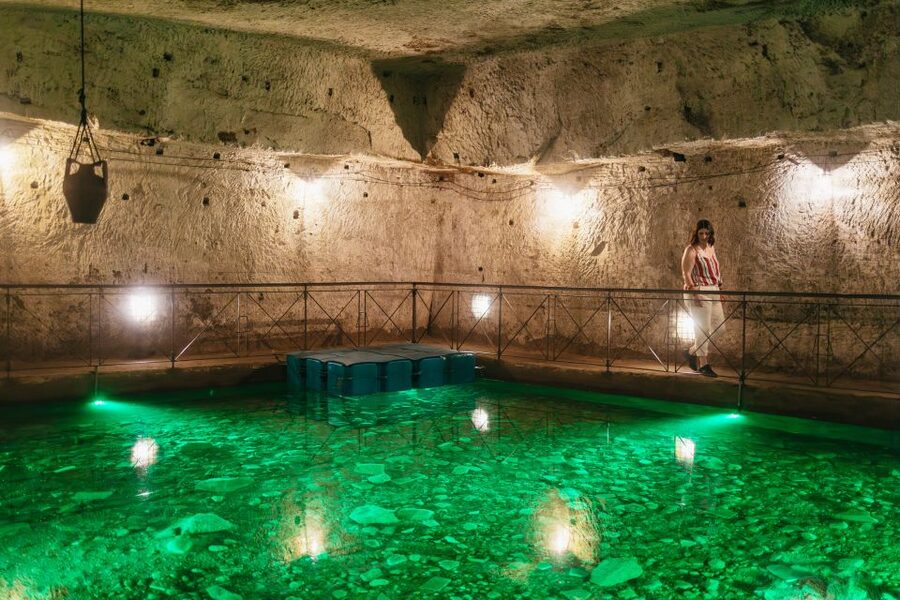
Your tour starts from the Palazzo Serra di Cassano basement. That matters because you’re not approaching an isolated tunnel entrance on a pretty plaza. You’re entering a working underground system with narrow circulation and stairways that feel very real.
Here’s the practical part you should respect before you book. There is an entrance staircase with 90 steps. If you select the option that includes the Via delle Memorie route, the entrance staircase becomes 115 steps.
This is not the kind of site where you can casually “power through” with a mild discomfort. Many people handle it fine, but if you have knee issues, mobility limitations, or you simply know stairs tire you out fast, you should take the step count seriously. The upside is that once you’re down, you’re in an underground setting with a different kind of pacing than you’d get outside on a hot Naples day. One of the most common takeaways is that it can feel cooler underground than the street heat.
Also consider sightlines and acoustics. Underground spaces can be echo-y, and it can get hard to hear at some points, especially if the group gets louder. If you’re someone who really needs audio clarity, plan to sit where your guide can see you clearly.
What Ferdinand II meant: the original purpose you’ll hear about
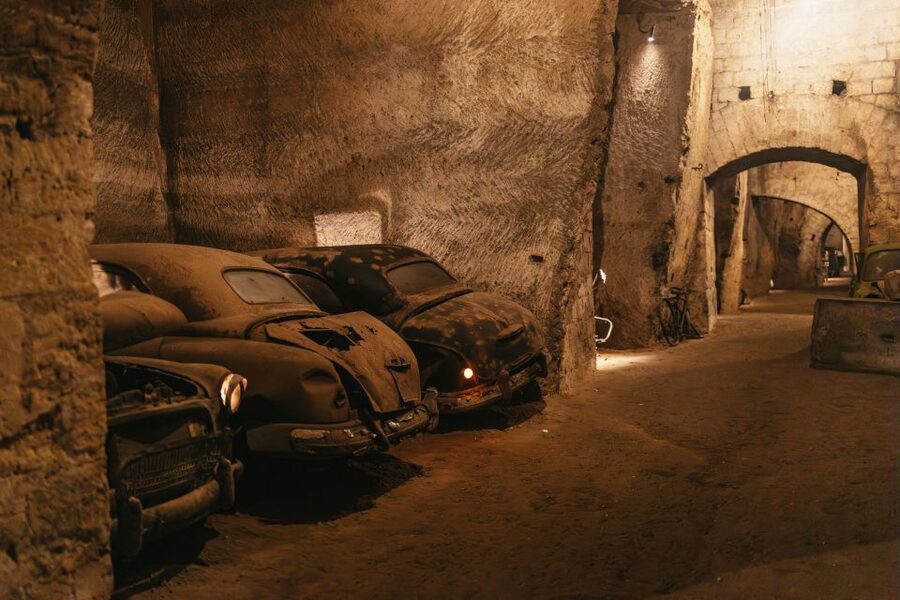
The guide’s storyline usually begins with why Ferdinand II had any tunnel idea at all. The tunnel’s creation is tied to fear of rebellion, and the planned escape route connects directly to where royal power lived above ground.
That context matters because it changes how you interpret the architecture. Instead of thinking of the tunnel as a leftover curiosity, you understand it as a response to tension in the city. It’s a reminder that underground spaces often start as practical solutions to real-world pressure.
As the tour moves through time, you’ll also get a sense that the tunnel never stayed in one role. It was intended as escape, then repurposed for wartime medical use, then shifted again after WWII. That shifting is part of what makes the experience work: your brain keeps updating what this place “is,” because the facts keep changing.
WWII rooms you can picture: hospital use, handwritten messages, and afterward
World War II is a big theme in this tour, and it’s handled through specific details you can actually see or track in the guide’s narrative.
You’ll learn that the tunnel was used as a military hospital. After the war, it became the Hall Judicial Deposit, and the war left evidence in the subsoil itself. This is where the tour turns especially moving: you can find handwritten messages of wishes and desolation left by people who lived there.
I like that they don’t treat these details like trivia. The guide frames them as human marks on a space that was otherwise stone and passageways. You end up reading the underground like a document, not like a theme park set.
There’s also a specific stop that often sticks with people: a section connected to a 17th-century water tank. It was later used as a bomb shelter. That combination of engineering purpose plus wartime reuse gives you a clearer mental map of how Naples adapted its underground infrastructure in crisis.
Fascist-era statues and abandoned vehicles: why these stops hit
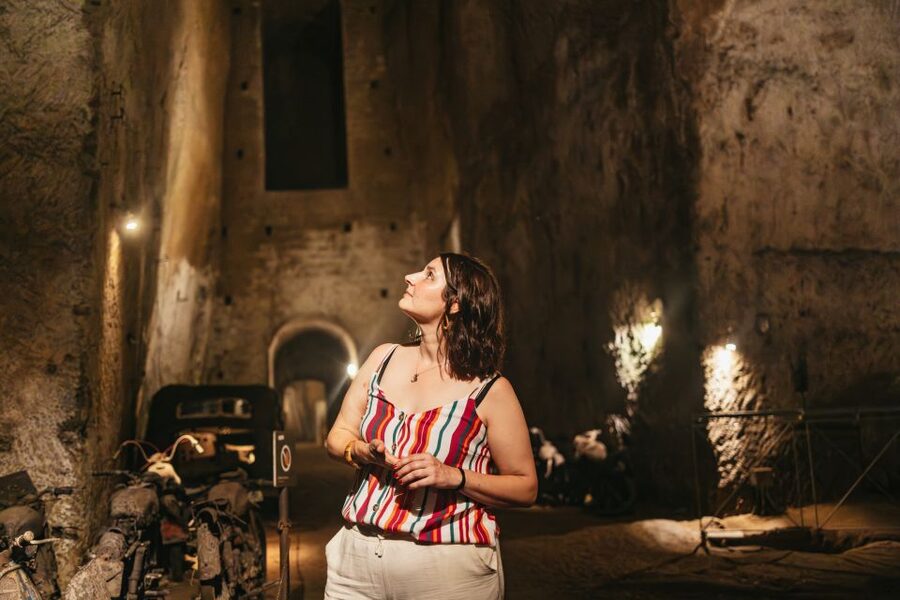
This tour includes visual finds that are easy to describe but harder to forget.
You’ll see statues dating back to the fascist period. Seeing political sculpture down here changes the tone immediately. It feels less like a museum label and more like a reminder that ideology left physical traces everywhere, including underground.
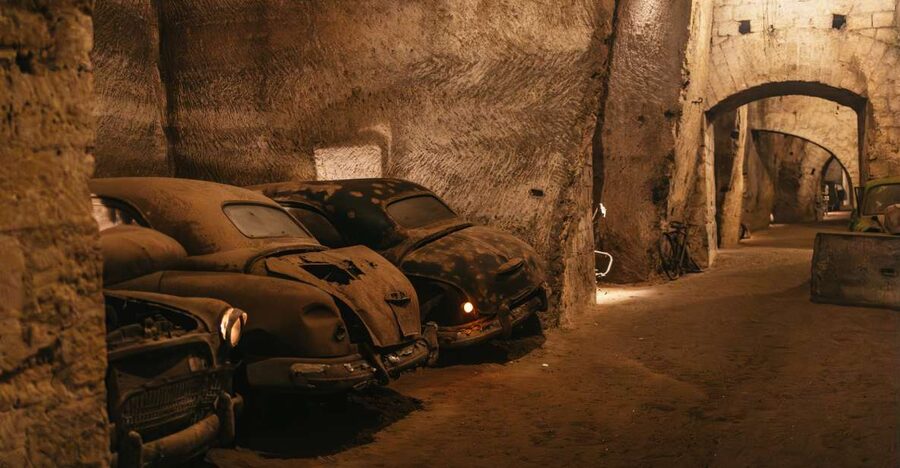
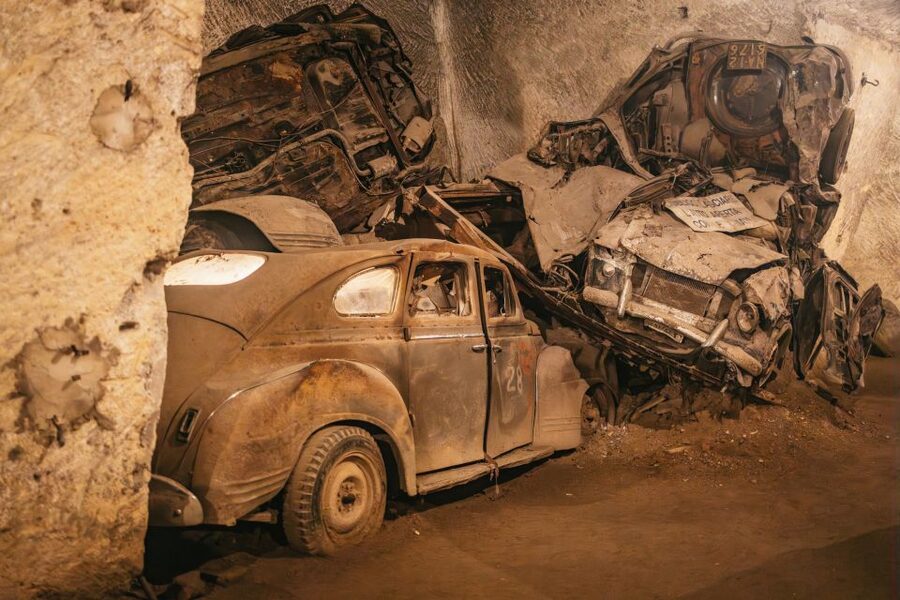
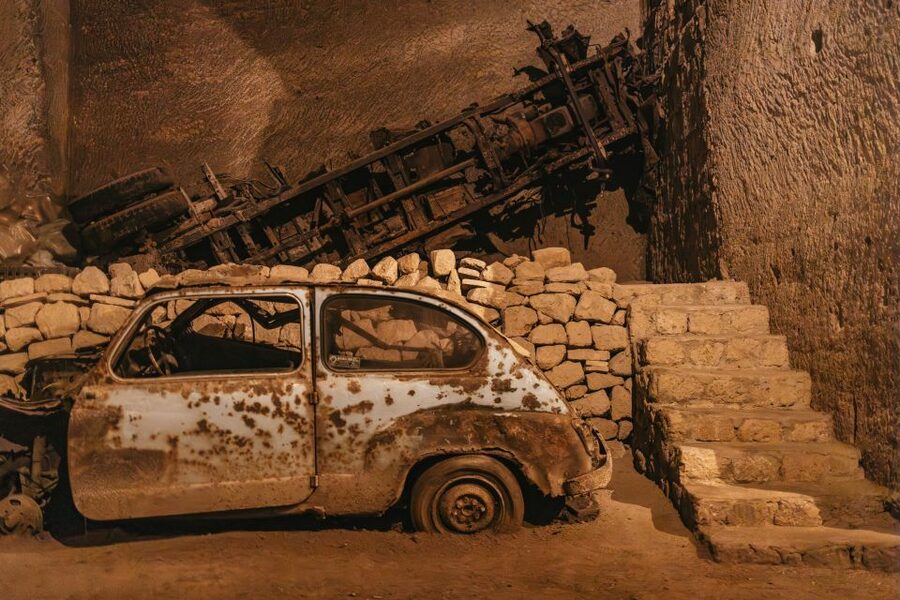
Then there’s the exhibition of cars and motorcycles. These weren’t displayed when they were first found; they were abandoned for years and then cleared from rubbish as part of restoration and discovery work. That detail matters because it gives you scale: people weren’t just sheltering in bare corridors. Their lives included vehicles, everyday objects, and practical equipment.
Together, the statues and vehicles do something smart. They bridge the gap between large historical events and normal, tangible life. You can stand in a tunnel and still picture daily routines, not only emergency moments.
The Via delle Memorie option: an extra underground walk carved into tuff
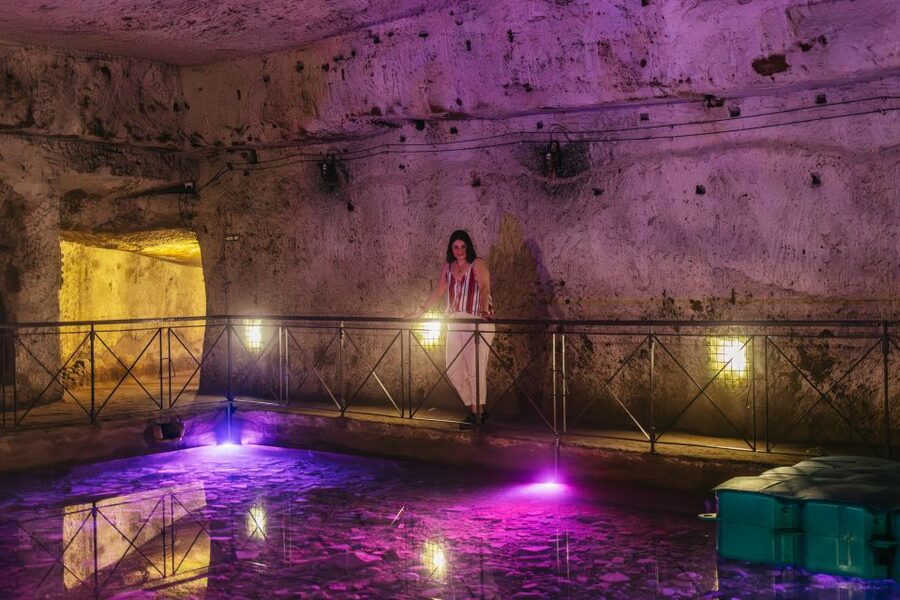
If you want a more extended underground route, choose the Via delle Memorie option. This adds a walking segment along a historic underground route carved out of the tuff.
I like this option because it gives you a second way to experience the site. Instead of only moving through tunnel segments described in a strict flow, you also get the feel of an older cut-through passage. It’s also where the tour becomes more about continuity: you see the tunnels as connected infrastructure, not a few isolated rooms.
The trade-off is physical. The entrance staircase increases to 115 steps for this option. If you’re deciding between the standard tour and the Via delle Memorie add-on, use your body as the deciding factor. The route adds value, but it also increases the main challenge of the day: stair effort.
How the guided storytelling lands: pace, Q&A, and real personalities
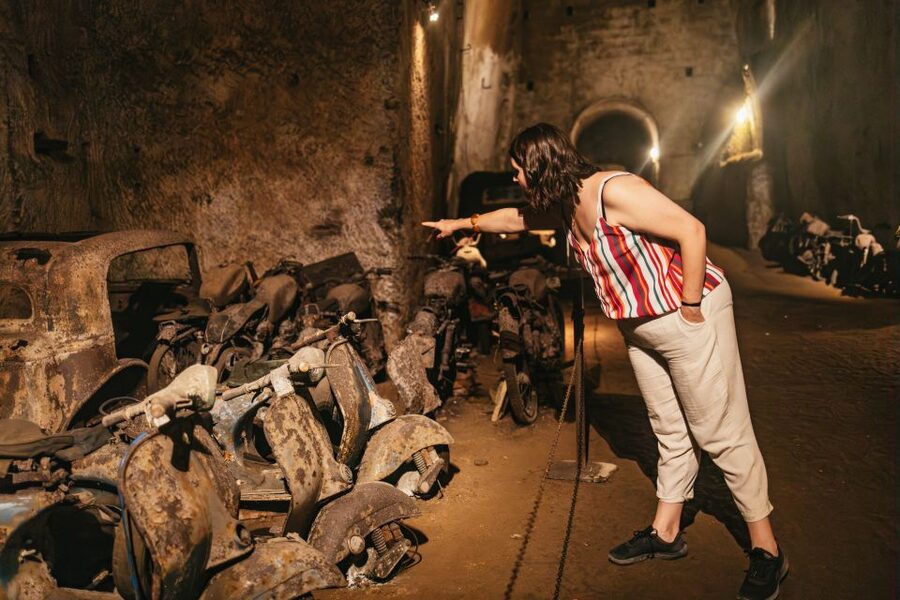
This is the kind of tour where the guide can make or break the experience, and the track record here is strong.
Across guide names you might encounter, like Martina, Alexandria, Alessandra, David, and Davida, the consistent thread is enthusiasm plus clarity. People commonly mention that guides answer questions and keep the group moving at a pace that makes the information stick. On small-group departures, the tour can feel almost like a private lecture with walking pauses.
There’s also a special layer in the delivery. Some guides and staff connected to restoration work seem able to go deeper than a standard script. One review even mentioned chatting with Marco, a cofounder, at the end. That kind of direct connection adds weight because you’re not only learning about the tunnel. You’re also seeing how preservation efforts keep it accessible.
You should also note the pacing style: the tour is only about an hour, but many people say it felt longer in a good way. That usually means the guide spends the time on story beats and visible details rather than rushing you through blank corridors.
Price and value for a 1-hour Bourbon Tunnel visit
At about $17 per person for a 1-hour guided tour with an entrance ticket, this is priced like a high-value history stop. The reason it feels worth it is simple: you’re paying for more than entry. You’re paying for interpretation—plus access to a working underground site that includes WWII elements, specific historical finds, and restoration displays.
Small group availability is another value multiplier. When the group is small, you get more chances for questions and better listening. And because you’re underground, you’re also buying relief from Naples street heat. Even if you’re not chasing the biggest sites on your itinerary, a cool, focused hour can be a smart trade.
Exit and final details: what the end of the tour feels like
The tour ends after the last tunnel section walk. One practical detail I’d flag: the exit can pass through an underground car park area. That may sound strange if you’re picturing a clean, straight line back to street level, but it’s part of how the space is integrated into the modern area around the tunnels.
Also keep an eye out for the small shop/gift area at the end. People often mention it as a quick stop to browse artifacts and take a tangible reminder home.
If you’re sensitive to echoes or sound clarity, the final stretch is a good time to stay attentive to what the guide is pointing out. Underground acoustics can make some areas harder to hear than others, even with a great guide.
Should you book the Bourbon Tunnel guided tour?
I think you should book if you want Naples history with texture—facts tied to physical spaces, not only photos. It’s a strong fit for you if you’re drawn to WWII stories, underground engineering, and the way everyday life shows up in abandoned objects like cars and motorcycles. The $17 price for a guided, entry-included hour also makes it a low-risk add-on to most Naples itineraries.
Skip or adjust expectations if stairs are a dealbreaker for you. The 90 steps entrance (or 115 steps with Via delle Memorie) is the biggest constraint on this experience. And if you rely heavily on perfect audio in echo-heavy areas, go in planning to lean in and position yourself well for the guide.
If you can handle the stairs and you like history that feels human and specific, the Bourbon Tunnel is the kind of Naples detour that gives you a different city view—literally underneath your feet.
FAQ
How long is the Bourbon Tunnel guided tour?
The duration is 1 hour.
How much does the tour cost?
The price is $17 per person.
What language is the live guide available in?
The live tour guide is available in English and Italian.
Is there an entrance ticket included?
Yes. The tour includes an entry ticket and a guided tour.
What will I see inside the tunnel?
You can expect to see historical underground sections tied to the tunnel’s past uses, handwritten messages, fascist-period statues, and an exhibition of cars and motorcycles. You may also see WWII-related finds and a 17th-century water tank used as a bomb shelter.
What is the Via delle Memorie option?
The Via delle Memorie option adds an underground route along the historic tuff-carved route. This option is available if selected.
How many steps are there at the entrance?
There are 90 steps at the entrance for the standard tour. If you choose the Via delle Memorie option, there are 115 steps at the entrance.
Where does the tour start?
The tour starts from the Palazzo Serra di Cassano basement.
Is the group size small?
Yes, small group availability is offered.
Can children join?
Children under age 10 can enter for free.
If you want, tell me your rough travel dates and whether stairs are an issue, and I’ll help you decide between the standard tour and the Via delle Memorie option.